
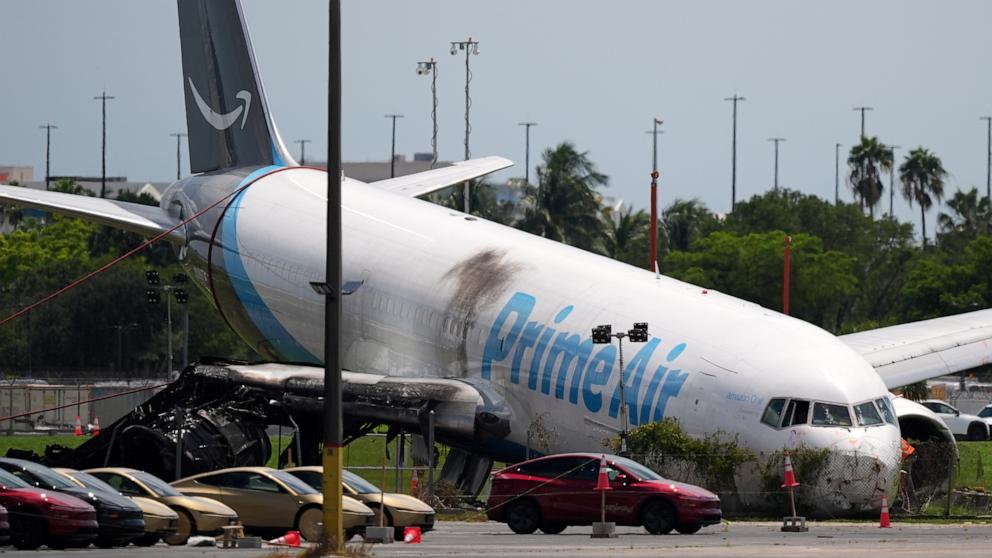
A preliminary report from the National Transportation Safety Board says the pilots of a cargo aircraft operating for Amazon Air were not warned about potentially strong tailwinds before the plane overran a runway at Miami International Airport. The September 6 crash killed five people and struck two vehicles on the ground.
The aircraft was operated by 21 Air, which provides cargo services for Amazon’s logistics network. According to reporting by Reuters and the Associated Press, an air-traffic controller had issued a wind advisory to another flight minutes earlier, including gusts of about 25 miles per hour from the south, but did not provide the same information to the cargo crew.
The report is preliminary and does not establish a final cause. Investigators are also examining the aircraft’s speed, braking systems and runway performance. Those factors are important because a strong tailwind can increase the aircraft’s groundspeed during landing and reduce the distance available for stopping. The interaction between weather, crew decisions, air-traffic information and aircraft systems will be central to the investigation.
The accident has implications beyond one airport. Cargo aviation has become increasingly important to retail, pharmaceuticals, industrial supply chains and time-sensitive manufacturing. As e-commerce networks expand, airlines and logistics companies are operating complex fleets across busy airports with narrow delivery windows. Safety systems must therefore manage not only passenger traffic but also high-volume freight operations.
The preliminary findings may also prompt renewed attention to how wind information is communicated. Controllers, pilots and airport operators use formal procedures, but the quality and timing of information can vary during changing weather. Training, automation and cockpit decision-support tools may all be reviewed as part of the broader safety response.
The NTSB has not completed its investigation, and additional evidence could change the understanding of the crash. Investigators will examine flight-data recordings, communications, aircraft maintenance, runway conditions and organizational procedures before issuing a final report.
For the industry, the case highlights the importance of treating operational information as a safety-critical asset. A warning provided to one aircraft but not another can become consequential when wind conditions, landing speed and available braking distance combine. The final findings will be watched by airlines, airports, regulators and cargo customers seeking to strengthen resilience in an increasingly vital logistics system.
Sources: - https://www.investing.com/news/stock-market-news/pilots-of-crashed-amazon-cargo-plane-were-unaware-of-wind-conditions-4928643 - https://abcnews.com/amp/Business/wireStory/federal-report-pilots-warned-wind-before-amazon-cargo-plane-136931755